Skip to content

Cart

Your cart is empty

Plugin solar in the Netherlands

Can I use a plug-in solar kit in the Netherlands? Not simply by plugging it into any socket. The Netherlands has no specific rule for plug-in (balcony) solar. The Dutch wiring standard NEN 1010 says solar panels must be connected to their own final circuit in the fuse box, with nothing else on it, and the standards body NEN says an ordinary shared socket is not permitted. In practice, an electrician adds a dedicated circuit and socket. Every grid-connected system must be registered with the grid operator at energieleveren.nl. Net metering (salderen) ends on 1 January 2027. After that, your supplier pays a feed-in fee of at least 50% of the bare electricity price until 2030.

General overview for Netherlands

Plugin solar kits: None set

There is no separate plug-in category and no official power limit for self-installed kits. The standard NEN 1010 requires the inverter to be on its own final circuit with no other appliances, and NEN states that plugging into an arbitrary socket is not allowed. In July 2026 the government decided not to use the EU option to promote plug-in systems up to 800 W.

Other solar kits

There is no separate limit for larger kits: the same NEN 1010 rule applies at any size. A kit above 800 W also needs its own final circuit with no other appliances, normally fitted by an electrician in the fuse box (or a PV distribution box). Every system must be registered at energieleveren.nl. Panels on a roof usually need no permit, but national building rules (Bbl) apply.

Feed-in compensation

Yes, you can export surplus power. Until 31 December 2026, small consumers can offset exports against their consumption (net metering). From 1 January 2027, net metering ends. Suppliers must then pay a feed-in fee of at least 50% of the bare supply rate until 2030, and may charge feed-in costs. Using your own power directly will matter most.

The legal basis for plugin solar in Netherlands

The Netherlands has no law or decree specific to plug-in solar. The key technical rule is NEN 1010, the Dutch standard for low-voltage electrical installations. It requires solar systems to be connected to a separate final circuit so the fuse can still protect the wiring. In August 2024, NEN, its solar and low-voltage standards committees, and the product safety authority NVWA warned that connecting a solar inverter to an ordinary shared socket is not permitted. Some sellers argue that NEN 1010 binds installers rather than consumers, but no authority has confirmed that reading.

Grid connection and registration fall under the Energy Act (Energiewet, in force since 1 January 2026) and the Grid Code Electricity (Netcode elektriciteit). The law ending net metering takes effect on 1 January 2027 (Rijksoverheid – salderingsregeling).

At EU level, the reformed Electricity Directive lets member states promote plug-in systems up to 800 W. In its July 2026 bill implementing that reform, the Dutch government chose not to use this option. Commission Recommendation (EU) 2026/1007 asks member states to remove permitting for balcony PV up to 800 W, but it is not binding. This page is guidance, not legal advice.

Certification and registration requirements in Netherlands

Product rules. Equipment sold in the EU must carry CE marking. From 0.8 kW, inverters fall under the EU grid code for generators (Regulation (EU) 2016/631). Ask the seller for the EU declaration of conformity.

Electrician. To follow NEN 1010, a qualified installer should fit a dedicated circuit and socket for the solar inverter, with no other appliances on it.

Registration. Registering every grid-connected solar system with your grid operator is a legal obligation. You do this online at energieleveren.nl, run jointly by the Dutch grid operators. You create an account, link it to your connection using your meter number, and enter:

  • the inverter make, type and power (kW)
  • the number of panels and their peak power (Wp)
  • the date the system started running

Home batteries of 0.8 kW or more must also be registered. You can ask an installer, or your grid operator by phone, to register for you.

How to handle your utility in Netherlands

  1. Register the system at energieleveren.nl as soon as it is installed. Your grid operator then passes the details to your energy supplier.
  2. If you still have an analogue meter, the grid operator may contact you to replace it with a smart meter, which records imports and exports separately.
  3. Check your contract. Net metering ends on 1 January 2027, so look at your supplier's terms for exported power: the feed-in fee (at least 50% of the bare supply price until 2030) and any feed-in costs. These differ a lot between suppliers. A new fixed contract signed now sets these terms for its whole duration.
  4. There is no legal right to install balcony panels, so if you rent or live in a flat, ask your landlord or homeowners' association (VvE) before mounting anything on the façade or balcony.

Are there any incentives for plugin solar in Netherlands?

0% VAT: since 1 January 2023, supply and installation of solar panels on or near a home is VAT-free (Belastingdienst). This covers panels, inverters, mounting material and the PV circuit work needed. Home batteries are still charged 21% VAT. Private owners usually don't need to register for VAT.

Net metering stays at 100% until 31 December 2026; after that, exports earn only the supplier's feed-in fee. There is currently no national purchase subsidy for solar panels. Check your municipality for local schemes.

Contribute to this overview

While we researched each country's regulation diligently, we might have missed a recent update or got something wrong. If you have more updated information, please contribute to this overview and message us.

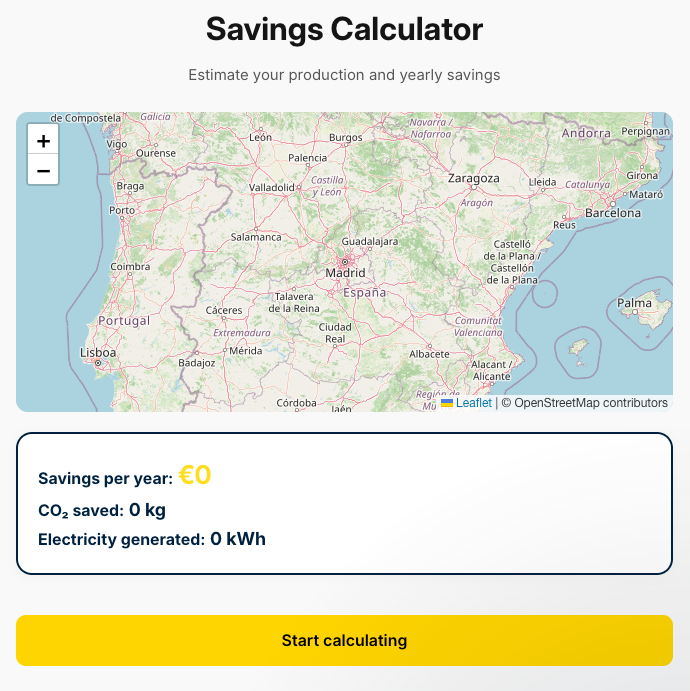
Savings Calculator

Estimate your production and yearly savings

Savings per year: €0

CO₂ saved: 0 kg

Electricity generated: 0 kWh

Find your Robinsun solar kit

Where will you install it?

Choose the mounting location for your kit.

How many panels?

Pick the kit size that fits your needs.

Disclaimer: In Spain, outputs above 800 W require grid certification (CIE) to export surplus. We can handle it for you.