Skip to content

Cart

Your cart is empty

Plugin solar in Denmark

No. In Denmark you may not plug a solar kit into an ordinary wall socket. The Danish Safety Technology Authority (Sikkerhedsstyrelsen, part of the Danish Business Authority since January 2026) says balcony and plug-in kits with a normal plug must not be used, because they can overload wiring and create a risk of electric shock. The same kit is legal if an authorised electrician connects it in your fuse box, like any other solar system. You can mount and assemble a complete kit yourself; only the electrical connection needs the electrician, who also notifies your grid company. There is no special watt limit for this route. This page is guidance, not legal advice.

General overview for Denmark

Plugin solar kits: Not allowed

Not allowed. In Denmark you may not connect any solar system to an ordinary socket with a plug, whatever its size. The installation rules refer to the European standard HD 60364, and its clause 551.7.2 does not allow solar systems on a normal plug and socket. Sikkerhedsstyrelsen notes that plug-in kits usually range from a few hundred watts up to about 800 W.

Other solar kits

Allowed as a standard solar installation. An authorised electrical contractor (autoriseret elinstallatør) connects the kit in the fuse box, on the supply side of the residual-current device (RCD). You may mount and connect the parts yourself if you bought the kit as one complete product with assembly instructions. The electrician then notifies your grid company.

Feed-in compensation

Surplus can go to the grid once an electrician has connected the system and it is registered. Since 1 January 2024 surplus is settled instantly, with no net metering, and paid at the hourly spot price minus fees. To be paid, you need a contract with an electricity company that buys production. Without one, exported power earns nothing.

The legal basis for plugin solar in Denmark

Danish rules for electrical installations are set by the Electrical Safety Act (elsikkerhedsloven) and the installation order (installationsbekendtgørelsen), administered by Sikkerhedsstyrelsen. Both refer to the European standard series HD 60364. Clause 551.7.2 of HD 60364-5-551 does not allow a solar system to be connected through an ordinary plug and socket. Sikkerhedsstyrelsen therefore states that balcony or plug-in kits must not be plugged into a socket. Instead, an authorised electrician must connect them in the fuse box, on the supply side of the RCD.

Connecting a solar system is work reserved for authorised electrical contractors under the Authorisation Act (autorisationsloven). The energy minister confirmed this position in a parliamentary answer in February 2025. The EU's Commission Recommendation (EU) 2026/1007 of 30 April 2026 asks member states to ease rules for balcony solar up to 800 W, but it is not binding. As of November 2026, Denmark has not changed its rules.

Certification and registration requirements in Denmark

Your kit must be CE-marked like any electrical product sold in the EU. If you bought the kit as one complete product with assembly instructions, you may mount the panels and connect the parts yourself. The final connection in the fuse box must be made by an authorised electrical contractor. You can check that a contractor is authorised in Sikkerhedsstyrelsen's public register ("Tjek din håndværker").

The electrician notifies your grid company (netselskab) about the new system, and the grid company records it in the Danish Energy Agency's master data register for generating units. You do not register the system yourself. Ask your electrician for confirmation that the notification has been made.

How to handle your utility in Denmark

In Denmark your address decides your grid company; you cannot choose it. You can find yours at elnet.dk. Your electrician handles the grid notification when connecting the kit. You are free to choose your electricity supplier.

If you want to be paid for surplus power, sign an agreement with an electricity company that buys production from small solar systems (a "produktionselleverandør"). Since 1 January 2024 surplus is settled instantly, which means there is no net metering, and you receive the spot price minus the buyer's fees. Most kits will export little, because a small system's output is usually used at home. If you rent or live in a housing association, check with your landlord or board before fitting panels to a balcony or façade.

Are there any incentives for plugin solar in Denmark?

None currently for households: there is no national subsidy for private solar systems. Solar kits carry the standard Danish VAT rate of 25%. Electricity you produce and use yourself carries no electricity tax. In 2026 and 2027, however, the general electricity tax has been cut to the EU minimum of 0.8 øre/kWh (excluding VAT), so this saving is small until 2028.

Contribute to this overview

While we researched each country's regulation diligently, we might have missed a recent update or got something wrong. If you have more updated information, please contribute to this overview and message us.

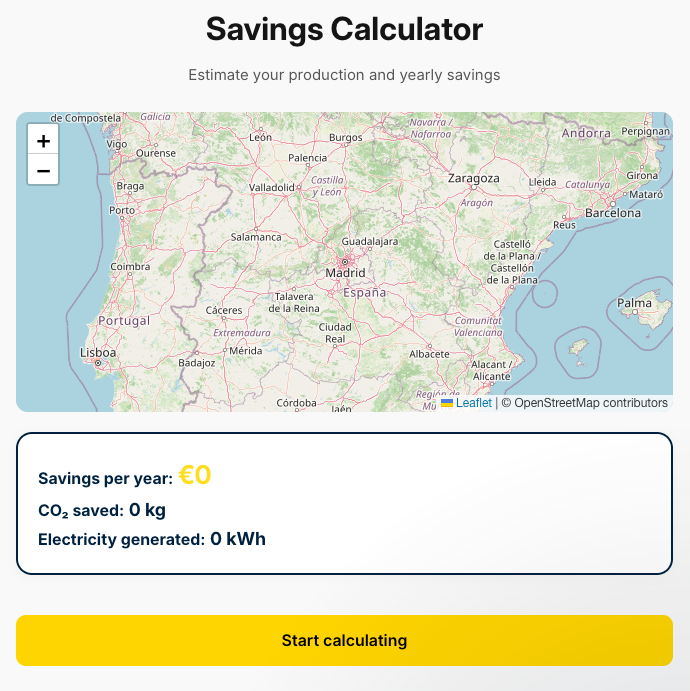
Savings Calculator

Estimate your production and yearly savings

Savings per year: €0

CO₂ saved: 0 kg

Electricity generated: 0 kWh

Find your Robinsun solar kit

Where will you install it?

Choose the mounting location for your kit.

How many panels?

Pick the kit size that fits your needs.

Disclaimer: In Spain, outputs above 800 W require grid certification (CIE) to export surplus. We can handle it for you.