Skip to content

Cart

Your cart is empty

Plugin solar in Norway

Yes, with caveats. You can use a plug-in solar kit in Norway, but not in an ordinary socket. Norwegian rules treat a plug-in kit as a power source that may only be plugged into a circuit designed for it: one dedicated circuit per kit, installed by a registered electrical company. The electrical safety authority DSB advises households not to connect balcony panels to a normal socket, and some grid companies refuse kits with a plug, so check with yours first. There is no official watt limit. Once connected, you can become a "plusskunde" and sell surplus power to your electricity supplier. A proposal in parliament (October 2026) asks the government to allow approved kits in ordinary earthed sockets by the end of 2027.

General overview for Norway

Plugin solar kits: None set

Allowed only on a dedicated circuit. Under the NEK 400 interpretation (NK 64, June 2024), a solar panel with a plug may only be plugged into a circuit designed for it, one per kit. An existing socket does not count, even one on its own circuit. There is no official watt limit. The connection point should be labelled "for connection of a power supply unit".

Other solar kits

There is no separate watt limit, so kits above 800 W follow the same rule: plug into a dedicated circuit designed for it, one per kit, installed by a registered electrical company. Larger fixed systems are installed as standard PV, and the electrician notifies your grid company. As a plusskunde you can feed in up to 100 kW. Enova support requires professional installation and an approved application before you order.

Feed-in compensation

Yes. Tell your grid company you want to be a plusskunde, and choose an electricity supplier that buys surplus power. It must be the same supplier you buy from. Payment is usually based on the spot price and varies by contract. Income from surplus sales is tax-free up to NOK 15,000 a year per home.

The legal basis for plugin solar in Norway

Norway has no law or regulation specific to plug-in solar. Home wiring must meet the Regulations on low-voltage electrical installations (FEL), supervised by DSB (Directorate for Civil Protection). Following the standard NEK 400 is the recognised way to meet them.

In June 2024 the NEK 400 committee NK 64 adopted Interpretation 2 (NEK 400:2022/TOL2:2024) of section 751.302.1.102.1. It says a solar panel feeding a home is a power supply unit. A panel supplied with a plug may only be used if it is plugged into a dedicated circuit for each plug-in unit. DSB explains that such a circuit must handle power flowing "backwards" and DC components from the inverter. An existing balcony socket is therefore not suitable, even on its own circuit.

DSB also says there is no product standard yet for plug-in kits as a whole. Work is under way on a two-way-protected "energy plug". NEK 400:2026 has applied since 1 July 2026; DSB's guidance still describes the dedicated-circuit rule.

A parliamentary proposal to allow plug-in kits in ordinary sockets (Dokument 8:17 S, 13 October 2026) is with the energy and environment committee. This page is guidance, not legal advice.

Certification and registration requirements in Norway

There is no national registry or simplified notification for plug-in kits. Installing a dedicated circuit is electrical installation work, which in Norway must be done by a registered electrical company. The electrician notifies your grid company and documents the work.

Products must carry CE marking and meet Norway's electrical safety rules. DSB says importers and distributors must take extra care that kits are safe. It warns that market surveillance could lead to sales bans, as has happened for some balcony panels in Sweden. DSB also points out that most kits are designed and tested for earthed European grids, not Norway's IT grid, so ask the seller about this.

Plug-in batteries that feed power into the home have no specific rule. Treat them like a plug-in kit and ask an electrician first. DSB's advice: DSB – what you should know about balcony panels.

How to handle your utility in Norway

Contact your grid company (nettselskap) before installing anything. Some grid companies do not accept balcony panels connected with a plug at all. The usual route:

  1. A registered electrician assesses your wiring and, if needed, installs a dedicated circuit.
  2. The electrician sends an installation notice to the grid company.
  3. To sell surplus, tell your grid company you want to become a plusskunde.
  4. Choose an electricity supplier with a plusskunde contract. You must buy and sell through the same supplier.

Your smart meter records what you export. Your supplier reports surplus income to the Tax Administration each year; check it against your tax return. Terms for surplus power differ a lot between suppliers, so compare plusskunde contracts.

Are there any incentives for plugin solar in Norway?

There is no subsidy for plug-in kits. Enova supports solar systems on homes with up to 25% of costs, capped at NOK 2,500 per kWp (up to 15 kWp). You must apply before ordering, and the system must be installed by professionals, so self-installed kits don't qualify.

Standard 25% VAT applies; the October 2026 proposal in parliament asks the government to study a VAT exemption. Electricity you produce and use yourself is not taxed. Surplus sales from your own home are tax-free up to NOK 15,000 a year.

Contribute to this overview

While we researched each country's regulation diligently, we might have missed a recent update or got something wrong. If you have more updated information, please contribute to this overview and message us.

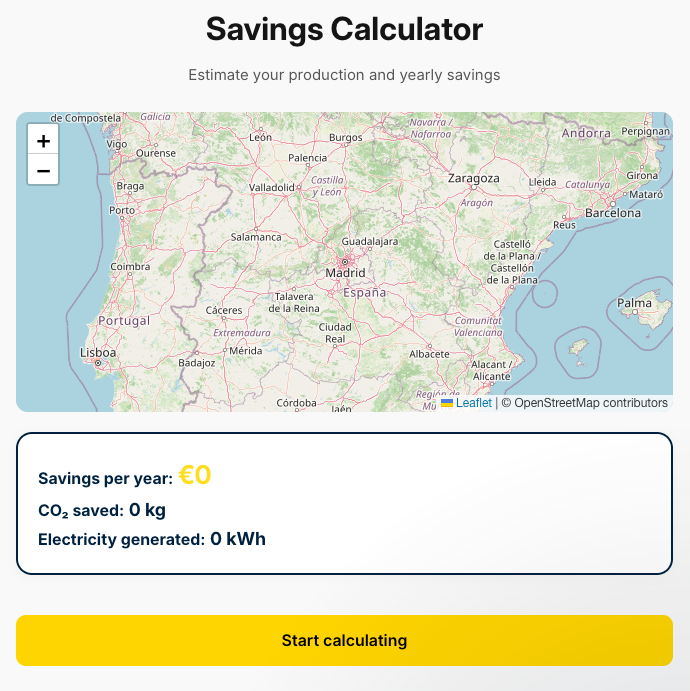
Savings Calculator

Estimate your production and yearly savings

Savings per year: €0

CO₂ saved: 0 kg

Electricity generated: 0 kWh

Find your Robinsun solar kit

Where will you install it?

Choose the mounting location for your kit.

How many panels?

Pick the kit size that fits your needs.

Disclaimer: In Spain, outputs above 800 W require grid certification (CIE) to export surplus. We can handle it for you.