Skip to content

Cart

Your cart is empty

Plugin solar in Slovenia

Yes. Slovenia is one of the few EU countries with a dedicated rule for plug-in solar kits, called "vtične proizvodne naprave". Since December 2022, a household can plug a kit into an ordinary socket without an electrician, a permit or a grid-connection approval. The kit may send at most 600 W into the grid at any moment, and the grid operators apply this as a 600 W limit on the kit's rated power. You must notify your grid operator 14 days before you start using the kit. The operator is Elektro Ljubljana, Elektro Maribor, Elektro Celje, Elektro Gorenjska or Elektro Primorska, depending on where you live. Surplus power that flows into the grid is not paid. Systems of 800 W or more need a formal connection approval.

General overview for Slovenia

Plugin solar kits: 600 W

Allowed for households through an ordinary socket. The limit is 600 W, counted as the rated power on the inverter's nameplate (or the panels' total, if lower). The kit must meet SIST EN 62109-1 and -2 and must not require a type B residual-current device. Businesses may use kits under 800 W, but only if no power ever flows into the grid.

Other solar kits

Systems of 800 W or more need a connection approval ("soglasje za priključitev") from your grid operator before installation. An installer usually handles this. You also need a new approval if you already have a solar system of 800 W or more at the same meter, even to add a plug-in kit. Approval can be refused where the local grid is full.

Feed-in compensation

With a plug-in kit, up to 600 W may flow into the grid. That energy is not recorded on your meter and you are not paid for it, so use as much of it at home as you can. On a three-phase connection, the kit only reduces consumption on the phase it is plugged into. Larger systems approved since 2024 settle surplus monthly through a supplier contract; annual net metering is closed to new systems.

The legal basis for plugin solar in Slovenia

Plug-in kits are governed by the Rules on technical requirements for connecting and operating plug-in renewable generating devices. These were published in the Official Gazette (Uradni list RS) No. 161/2022 on 23 December 2022 and took effect the next day. The ministry responsible for energy issued them under the Energy Act.

A plug-in device is defined as a renewable generator connected to a household's internal wiring that runs in parallel with the grid. The wiring must meet the low-voltage installation rules and section 11.3.8 (portable PV devices) of technical guideline TSG-N-002. The kit must meet the rules for low-voltage electrical equipment (CE marking). The household notifies the grid operator 14 days in advance. The kit may feed at most 600 W into the grid, the operator may not disconnect a compliant household, and exported energy is not recorded.

The system operator SODO applies the 600 W limit to the kit's rated power and requires a connection approval from 800 W. A revised TSG-N-002:2026 is in draft and keeps the plug-in rules. This page is guidance, not legal advice.

Certification and registration requirements in Slovenia

Your kit needs a CE declaration of conformity, covering either the whole kit or both the panels and the inverter. You also need a manufacturer document showing compliance with SIST EN 62109-1 and SIST EN 62109-2, and assembly and connection instructions in Slovenian that state the kit does not require a type B residual-current device.

The holder of the electricity account notifies the local grid operator at least 14 days before first use. The notice includes:

  • the owner's details
  • the metering point number
  • the kit's rated power in watts
  • the planned connection date
  • the documents listed above

You can use SODO's ready-made form or your operator's online portal (Elektro Ljubljana's page mentions the "Moj elektro" portal). There is no fee, and you do not need an approval or an electrician. Within 14 days, the operator must make sure you will not be disconnected for using the kit.

How to handle your utility in Slovenia

  1. Find your metering point number on your electricity bill.
  2. Check which company runs your local grid: Elektro Ljubljana, Elektro Maribor, Elektro Celje, Elektro Gorenjska or Elektro Primorska.
  3. Send the notice with the documents at least 14 days before plugging in.
  4. Check your wiring. Grid operators advise consulting an expert if you have doubts about your installation, or if your home has old two-wire wiring where the earth contact is joined to neutral ("ničenje"). The draft 2026 guideline would make this consultation mandatory in pre-1985 buildings with such wiring.
  5. Plug the kit into a socket on a circuit that is not already heavily loaded.
  6. On a three-phase supply, plug into the phase where your fridge and other always-on appliances run.

Your supply contract does not change, and surplus energy is not paid. If you already have a solar system of 800 W or more, ask your operator before adding a plug-in kit. Details: SODO – plug-in generating devices.

Are there any incentives for plugin solar in Slovenia?

There is no subsidy for plug-in kits, and the ministry said in 2025 that none is planned. Borzen runs subsidies for self-supply solar systems, with higher rates for systems with batteries. These require a grid-connection approval, so they apply to larger installer-built systems, not plug-in kits.

Kits bought on their own carry the standard 22% VAT. A reduced 9.5% rate can apply when a supplier installs a system as part of a home; ask the installer.

Contribute to this overview

While we researched each country's regulation diligently, we might have missed a recent update or got something wrong. If you have more updated information, please contribute to this overview and message us.

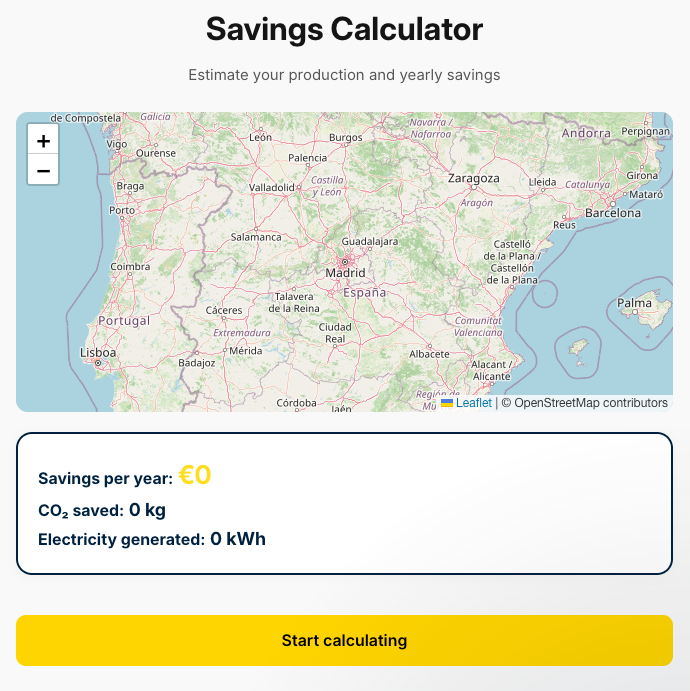
Savings Calculator

Estimate your production and yearly savings

Savings per year: €0

CO₂ saved: 0 kg

Electricity generated: 0 kWh

Find your Robinsun solar kit

Where will you install it?

Choose the mounting location for your kit.

How many panels?

Pick the kit size that fits your needs.

Disclaimer: In Spain, outputs above 800 W require grid certification (CIE) to export surplus. We can handle it for you.