
Skip to content

Cart

Your cart is empty

Plugin solar in Poland

Can I use a plug-in solar kit in Poland? Not as a simple plug-and-play device. Poland has no specific rules or power limit for plug-in or balcony solar. Any solar system connected to the grid, even a 400 W kit, is treated as a "microinstallation" (up to 50 kW). That means a qualified electrical installer must fit it, and your grid operator must be notified at least 30 days before it starts running. The operator then fits a two-way meter free of charge. Surplus power is credited at market prices under net-billing. In September 2026 the Ministry of Climate said it is not planning simpler rules. In apartment blocks you also need the building manager's consent.

General overview for Poland

Plugin solar kits: None set

Polish law has no plug-in category and no official watt limit for socket-connected kits. A kit is treated like any other solar microinstallation: a qualified installer must fit it, and the grid operator must be notified. Kits that never connect to your home wiring (off-grid) are outside these rules.

Other solar kits

Systems up to 50 kW can be connected by simple notification, as long as their power does not exceed your home's connection capacity. Otherwise you first apply for connection conditions. Solar systems up to 150 kW need no building permit. Above 6.5 kW, the design needs a fire-safety review and the fire service must be informed.

Feed-in compensation

Yes. New prosumers are on net-billing. Surplus is valued at the market price (RCE), multiplied by 1.23, and kept as a credit for buying electricity over the next 12 months. After a year, up to 30% of any unused credit can be refunded. Your grid operator installs a two-way meter free of charge.

The legal basis for plugin solar in Poland

Poland has no law specific to plug-in or balcony solar. Kits fall under the general rules for microinstallations, which the Renewable Energy Sources Act (ustawa o OZE) defines as renewable generators up to 50 kW on the low-voltage grid. Article 7(8d4) of the Energy Law (Prawo energetyczne) lets a household connect a microinstallation by simple notification if its power does not exceed the existing connection capacity.

The technical rules are in the Minister of Climate and Environment's regulation of 31 May 2023 (Dz.U. 2023 poz. 1098). It requires:

  • installation by an installer with the qualifications in Article 54 of the Energy Law
  • a single-line wiring diagram
  • built-in grid protection, including anti-islanding
  • settings protected against changes by unauthorised people

On 16 September 2026, the Ministry of Climate confirmed to Gramwzielone.pl that balcony systems follow the same rules as other microinstallations, and that no simplification is being prepared. A draft building regulation (WT 2026) would add rules for balcony systems: up to 2 kW of inverters, 2.3 kW of panels and 60 V DC. As of late October 2026 it had not been published. This page is guidance, not legal advice.

Certification and registration requirements in Poland

Microinstallations must have:

  • built-in protection against over/under-voltage, over/under-frequency and islanding
  • CE marking
  • a nameplate and manual in Polish
  • an RS485 communication port

Generators of 0.8 kW and above must also meet the EU grid code for generators (NC RfG). Grid operators accept inverters on the PTPiREE list of certified devices without extra documents. Otherwise, you attach the datasheet and a certificate.

The notification goes to your grid operator, using form ZM or the operator's online form. Either the installer files it, or you file it with the installer's signed statement. It includes your meter point number (PPE), the panel and inverter data, and a declaration made under criminal liability. Kits that are never connected to the household wiring need no notification.

How to handle your utility in Poland

  1. Find your grid operator (OSD). It is named on your bill: PGE Dystrybucja, Tauron Dystrybucja, Enea Operator, Energa-Operator or Stoen Operator (Warsaw).
  2. Check your connection capacity (moc przyłączeniowa) on your contract. The total power of the solar system plus any battery must not exceed it. If it would, apply for higher capacity first.
  3. Have a qualified installer fit the kit. Then submit the notification at least 30 days before you plan to start. Tauron and others offer online forms.
  4. The operator has 30 days to connect you and swap your meter for a two-way meter, free of charge. Start the system only after the operator confirms.
  5. The operator informs your electricity supplier, which then credits your surplus under net-billing.

In apartment blocks, get written consent from the housing cooperative or community before fixing panels to a balcony or façade.

Are there any incentives for plugin solar in Poland?

There is no subsidy for plug-in or balcony kits; in September 2026 the Ministry of Climate said none is planned. The Przydomowe Magazyny Energii programme (open from 20 October 2026) funds home batteries of at least 10 kWh for existing prosumers, not small kits. Owners of single-family houses can deduct solar costs under the thermo-modernisation tax relief (ulga termomodernizacyjna, up to PLN 53,000 per person). VAT is 8% when a company supplies and installs solar on a home (house up to 300 m², flat up to 150 m²). Buying a kit on its own costs 23% VAT.

Contribute to this overview

While we researched each country's regulation diligently, we might have missed a recent update or got something wrong. If you have more updated information, please contribute to this overview and message us.

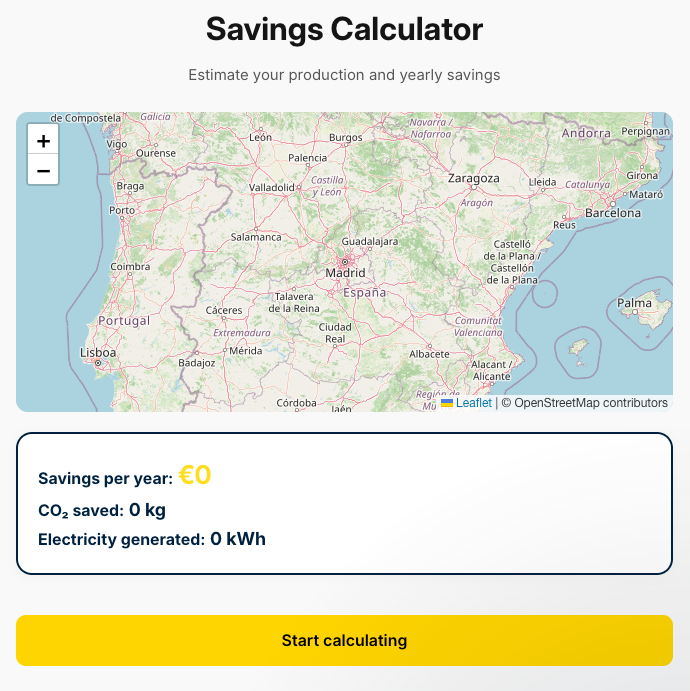
Savings Calculator

Estimate your production and yearly savings

Savings per year: €0

CO₂ saved: 0 kg

Electricity generated: 0 kWh

Find your Robinsun solar kit

Where will you install it?

Choose the mounting location for your kit.

How many panels?

Pick the kit size that fits your needs.

Disclaimer: In Spain, outputs above 800 W require grid certification (CIE) to export surplus. We can handle it for you.