Skip to content

Cart

Your cart is empty

Plugin solar in Lithuania

Yes. In Lithuania you can use a plug-in solar kit without an electrician, as long as the inverter delivers no more than 800 W and the panels add up to no more than 3,600 Wp. After installing it, you fill in a short online form for ESO, the national grid operator. There are no grid connection conditions and no contract to sign first. ESO then reprograms or replaces your meter and you become a "producing consumer" (prosumer). Power you don't use is stored in the grid and can be taken back later for a regulated fee. In apartment buildings, panels on the outside of a balcony or façade need the approval of most flat owners, and some buildings also need a permit.

General overview for Lithuania

Plugin solar kits: 800 W

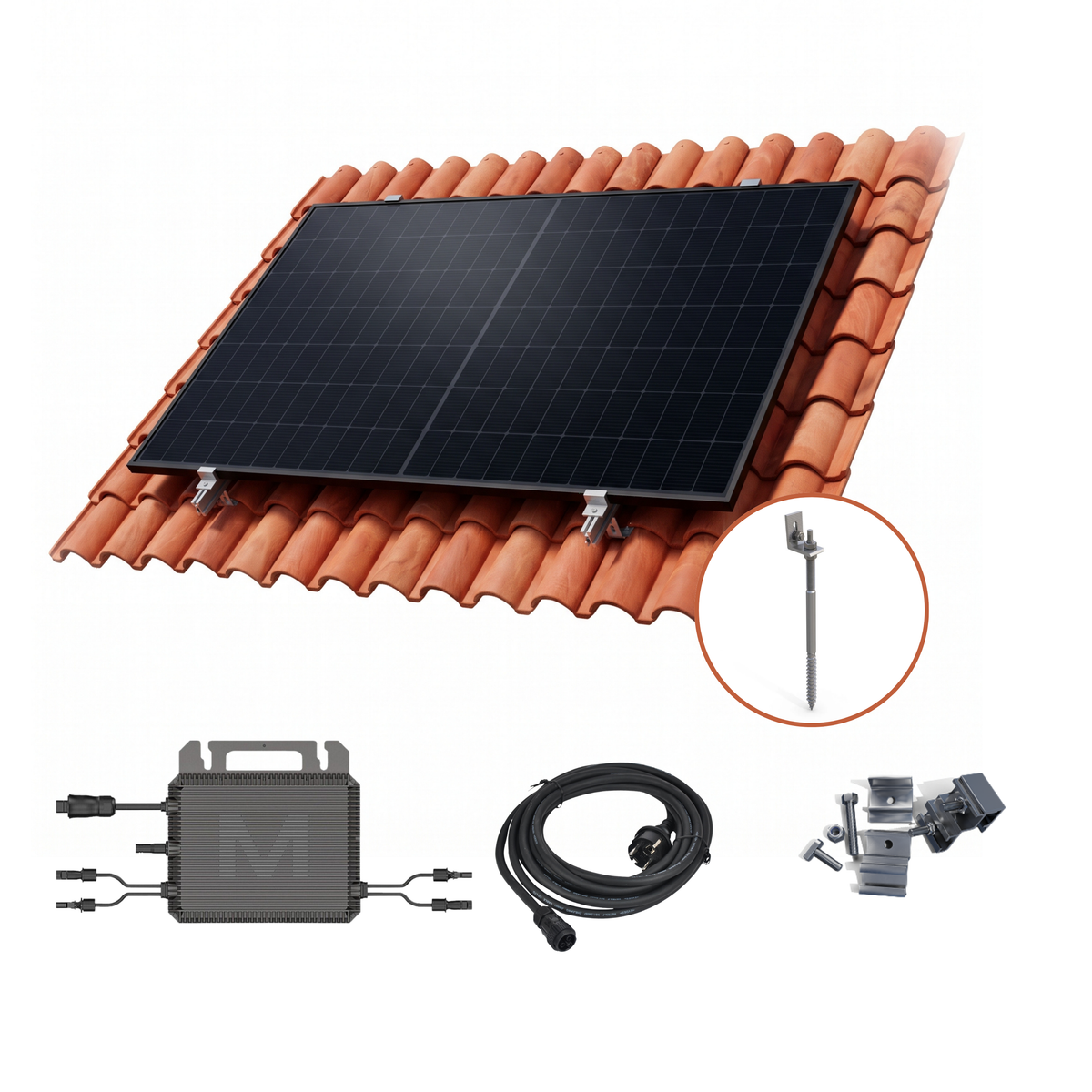
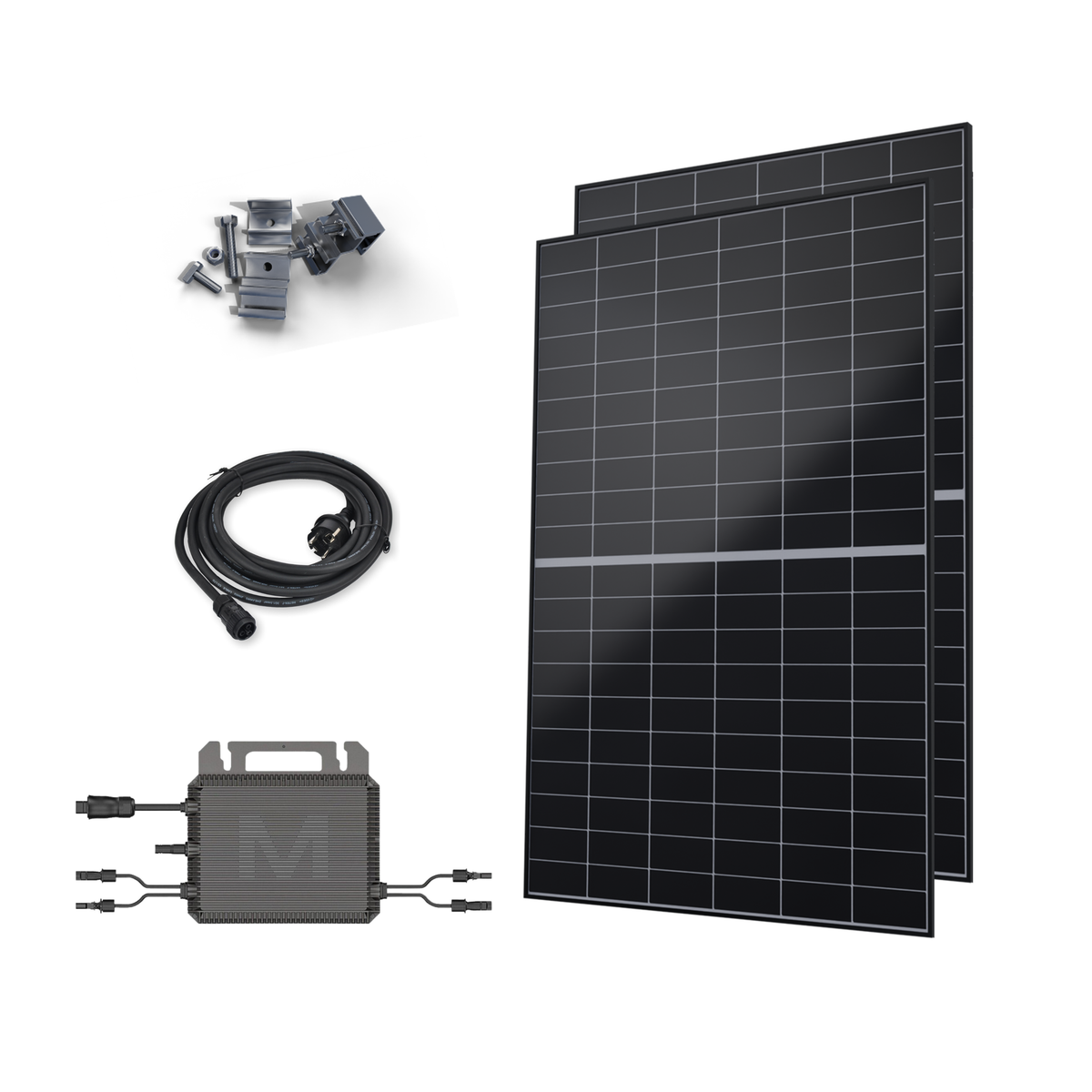
Allowed. Inverter output (AC) up to 800 W and panels up to 3,600 Wp in total. You can install the kit yourself and plug it into an ordinary socket; no certified contractor is needed. Tell ESO online after installation so your meter is updated. If you already have a solar plant on the same connection, check with ESO before adding a plug-in kit.

Other solar kits

Above 800 W, the system must be installed by a certified contractor (atestuotas rangovas), who files a contractor's declaration with ESO. If export to the grid is limited to 1 kW, systems up to 100 kW need no grid connection conditions (since September 2025). Exporting more than 1 kW requires connection conditions from ESO and may involve grid upgrade costs.

Feed-in compensation

Yes. Surplus power goes to the grid and is credited as stored energy, not cash. You pay ESO a regulated grid fee using one of several methods. For example, in 2026 the percentage method keeps 37% of the kWh you export. The current storage period runs 1 April 2026 to 31 March 2028, and your supplier pays out any unused balance at the end. ESO fits a smart meter.

The legal basis for plugin solar in Lithuania

Grid connections in Lithuania are governed by the Description of the Procedure for Connecting Electricity Producers' and Consumers' Equipment to the Grid, approved by Energy Minister's Order No. 1-127 of 4 July 2012 (as amended). Since 9 May 2023, plants of no more than 0.8 kW can connect under a simplified procedure: the owner informs the distribution grid operator after installation.

The details are in ESO's Procedure for Using the Electricity Distribution Network, coordinated with the energy regulator VERT. Allowed export power and inverter maximum capacity (Pmax) are capped at 0.8 kW, installed panel power at 3.6 kW, and no connection conditions are needed.

Prosumer status and grid storage follow the Law on Renewable Energy Sources (Articles 20¹ and 20⁴). VERT sets prosumer grid fees each year.

Under building rules (Law on Construction, STR 1.01.08:2002), panels on the outside of a balcony or façade change the building's appearance. A building permit is only needed for "special" buildings, such as residential buildings 20 m or taller or cultural heritage sites.

This page is guidance, not legal advice.

Certification and registration requirements in Lithuania

There is no Lithuanian product standard specific to plug-in kits. Your kit must carry the CE mark, and the inverter must meet EU grid-connection requirements.

To register, fill in ESO's online form "Connection of a power plant up to 0.8 kW" (Elektrinės iki 0,8 kW prijungimas, in Lithuanian) after installing. You enter the installed panel power, inverter power and Pmax, and attach the technical data of the inverter and panels. You confirm that you own the property, that the equipment meets legal requirements, that you will operate it safely, that you have any permits or consents needed, and that you will tell ESO if you stop using it.

ESO then updates your grid documents and meter; suppliers say this usually takes about 8 working days. No contractor's declaration is needed for kits within the 0.8 kW limit.

How to handle your utility in Lithuania

ESO (Energijos skirstymo operatorius) runs the distribution grid for almost all Lithuanian households. Your electricity supplier (Ignitis or an independent supplier) bills your energy.

  1. Find your 8-digit object number in ESO self-service (mano.eso.lt).
  2. Install the kit and submit the 0.8 kW form.
  3. ESO installs a smart meter or reprograms your existing one, so power you export isn't billed as consumption.
  4. As a new prosumer you are given a grid-fee method automatically. You can change it within 5 working days. After that, you can change it once every 12 months, or within one month after VERT publishes new prices.

Compare the methods in ESO self-service, or see ESO's prosumer payment methods for 2026. With a small plug-in kit, most power is used at home, so little grid fee applies. Your supplier settles any unused stored energy at the end of each two-year period; the next is 31 March 2028.

Are there any incentives for plugin solar in Lithuania?

VAT: the standard 21% applies; we found no reduced rate for solar kits.

Grants: APVA pays a fixed subsidy per kW for new household solar plants. The 2026 call opened on 9 June 2026 with a €13 million budget and is now closed. It paid €169.96 per kW, or €220.97 per kW for plants with no main component from China and module efficiency of at least 23%, for up to 7 kW. It required a certified contractor's declaration filed with ESO, so self-declared plug-in kits did not qualify. Installers expect another call before the end of 2026; check apva.lrv.lt before you buy.

Battery grants exist for larger solar-plus-storage systems, not for plug-in kits.

Contribute to this overview

While we researched each country's regulation diligently, we might have missed a recent update or got something wrong. If you have more updated information, please contribute to this overview and message us.

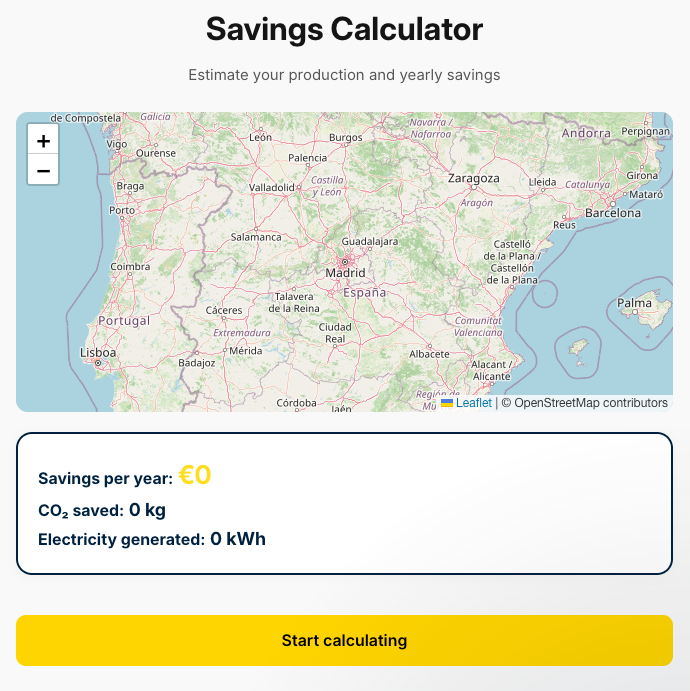
Savings Calculator

Estimate your production and yearly savings

Savings per year: €0

CO₂ saved: 0 kg

Electricity generated: 0 kWh

Find your Robinsun solar kit

Where will you install it?

Choose the mounting location for your kit.

How many panels?

Pick the kit size that fits your needs.

Disclaimer: In Spain, outputs above 800 W require grid certification (CIE) to export surplus. We can handle it for you.