Skip to content

Cart

Your cart is empty

Plugin solar in Ireland

Can I use a plug-in solar kit in Ireland? Not yet as a simple plug-and-play device. Ireland has no specific plug-in solar rule today, so a balcony or garden kit is treated like any other small solar system. A Safe Electric registered electrician connects it, sets the inverter to Irish grid settings and notifies ESB Networks on the NC6 form. Change is on the way. In 2026, ESB Networks backed a simplified route for plug-in solar and battery devices up to 800 W AC with simple registration, and a working group reported to the Government on 1 October 2026. An independent safety assessment and a legal review come next, and the Minister is reportedly aiming for mid-2027. This page explains today's rules and what is changing.

General overview for Ireland

Plugin solar kits: None set

No plug-in category exists yet. There is no official watt limit for self-installed kits, and plugging a generator into a normal socket is not a recognised connection. The proposed route covers devices up to 800 W AC in total, with simple registration (possibly at the point of sale) and, at first, one unit per home. Plug and socket rules are still to be set.

Other solar kits

Any grid-connected solar system, including small kits, goes through ESB Networks' "inform and fit" micro-generation process. It covers up to 6 kVA single-phase (25 A) or 11 kVA three-phase (16 A per phase) of inverter capacity. A registered electrician installs the system and submits the NC6 form with a type-test certificate. Larger systems need an ESB Networks mini-generation assessment.

Feed-in compensation

Yes, once registered. Under the Clean Export Guarantee, your electricity supplier pays its own rate for the surplus you export. You need a smart meter, which ESB Networks aims to fit within four months of a valid NC6. The first €400 a year of export income per person is tax-free until the end of 2028. Unregistered kits earn nothing.

The legal basis for plugin solar in Ireland

No Irish law, regulation or standard creates a plug-in solar category. Small solar systems fall under three sets of rules:

What is changing: on 28 July 2026, the Minister for Climate, Energy and the Environment told the Dáil that ESB Networks supports plug-in solar or battery devices up to 800 W AC. The conditions are safety, power quality, simple registration and product standards. A working group chaired by ESB Networks, with the Department, CRU, NSAI, Safe Electric and the CCPC, reported on 1 October 2026. Until new rules are published, today's rules apply. This page is guidance, not legal advice.

Certification and registration requirements in Ireland

Today, every grid-connected kit must be notified to ESB Networks before it is installed. Your electrician sends three things:

  • the NC6 form (online or by post);
  • the inverter's I.S. EN 50549-1 type-test certificate from an accredited lab;
  • the signed NC6-01 certificate confirming the Irish protection settings.

ESB Networks asks buyers to choose products on its Low Carbon Technology (LCT) Register. If ESB Networks has not objected within 20 working days, installation can go ahead. In apartment blocks sharing one supply, wait for ESB's assessment and permission first. If you installed a kit without notifying ESB Networks, you can use its retrospective registration process. The planned plug-in route should make registration much simpler, possibly through the shop at purchase. Product standards are still being set.

How to handle your utility in Ireland

ESB Networks runs the grid everywhere in Ireland, whichever supplier you use. The steps today:

  1. Ask a Safe Electric Registered Electrical Contractor to check your wiring and RCD and connect the kit. Officials have warned that many Irish homes have ageing wiring and outdated safety devices.
  2. The electrician files the NC6 with ESB Networks. There is no charge for micro-generation.
  3. Wait 20 working days. In apartments sharing a supply, wait for explicit approval.
  4. ESB Networks fits a smart meter, which you need for export payments.
  5. Tell your supplier you have micro-generation, to join the Clean Export Guarantee.

If you remove the kit, tell ESB Networks so it can cancel your export capacity. You can request NC6 forms on 1800 372 757. Details: ESB Networks – connect a micro-generator.

Are there any incentives for plugin solar in Ireland?

Plug-in kits get no direct support today. SEAI's Solar PV grant pays up to €1,800, plus €600 for a battery. It requires an SEAI-registered installer and a full installation (SEAI – enhanced grants). The Minister has said grants for plug-in solar are under review. VAT is 0% only when panels are supplied and installed on or next to a private home under one contract; panels bought on their own carry the standard 23% rate (Revenue guidance). The first €400 a year of export income per person is tax-free.

Contribute to this overview

While we researched each country's regulation diligently, we might have missed a recent update or got something wrong. If you have more updated information, please contribute to this overview and message us.

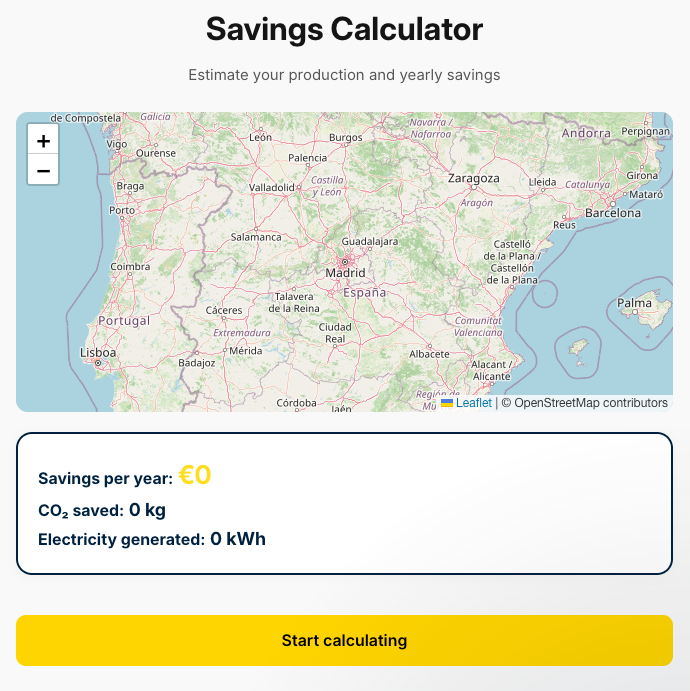
Savings Calculator

Estimate your production and yearly savings

Savings per year: €0

CO₂ saved: 0 kg

Electricity generated: 0 kWh

Find your Robinsun solar kit

Where will you install it?

Choose the mounting location for your kit.

How many panels?

Pick the kit size that fits your needs.

Disclaimer: In Spain, outputs above 800 W require grid certification (CIE) to export surplus. We can handle it for you.