Skip to content

Cart

Your cart is empty

Plugin solar in Finland

Can you use a plug-in solar kit in Finland? No. You may not plug a solar kit into an ordinary household socket yourself. The Finnish Safety and Chemicals Agency (Tukes) says plug-in solar panels are illegal because they breach the Electrical Safety Act and the Finnish installation standard. Power fed through a socket bypasses the circuit's fuse and can overload the wiring, and the system can't be reliably isolated for grid and rescue workers. Small solar systems are still possible, but only as a fixed installation connected by a registered electrical contractor and reported to your local network company. The government has started a study, and new electrical standards are due in 2027.

General overview for Finland

Plugin solar kits: Not allowed

Self-connected plug-in solar kits are not allowed in Finland, whatever their wattage. Tukes says feeding solar power through a socket breaks the Electrical Safety Act (1135/2016) and the national installation standard. So there is no watt limit and no notification route for do-it-yourself kits. Panels that only charge a portable power station not connected to your home wiring are a separate case.

Other solar kits

Any solar system that feeds your home wiring, even one or two panels, must be installed as a fixed system. The work must be done by an electrical contractor registered with Tukes (operating right A). The contractor connects it at the distribution board with an isolating switch and warning signs, and carries out the commissioning inspection. Before the system goes live, the contractor sends the details to your network company.

Feed-in compensation

Yes, if the system is properly installed. You need a buyer for your surplus before connection. Most electricity retailers offer a small-production contract, usually priced from the spot market minus a margin. Production and consumption in the same metering period are netted, and the network company may charge a fee for exported power. If you don't want to sell, export can be technically blocked.

The legal basis for plugin solar in Finland

Finland has no rule that allows plug-in solar. The Electrical Safety Act (Sähköturvallisuuslaki 1135/2016) requires installations to meet safety requirements. In practice that means the SFS 6000 low-voltage installation standard, including part 7-712 for solar PV, and only registered professionals may do installation work.

Tukes published its warning "Don't use a plug-in solar panel" on 24 July 2023 and repeated it in summer 2026. It says solar panels that feed power through a socket are illegal and can cause fire or electric shock: the circuit's fuse no longer protects the wiring, and the system can't be safely isolated. Tukes has not banned the products from sale, because product compliance is the responsibility of manufacturers and importers.

Grid connection of small production falls under the Electricity Market Act (588/2013). Change may come. In September 2026 the Ministry of Economic Affairs and Employment (TEM) said it is starting a study on plug-in solar. SESKO, the national electrotechnical standards body, is discussing a new product category with safer connections, and new electrical standards are due in 2027. This page is guidance, not legal advice.

Certification and registration requirements in Finland

Plug-in kits have no registration route, because self-connection is not allowed.

For a fixed system, all equipment must be CE-marked, and the inverter must meet the network company's requirements for generators running in parallel with the grid. These are set out in the Energiateollisuus recommendation YA 9:23, which refers to EN 50549-1.

The installer must hold operating right A (or A with restrictions); you can check any firm in the Tukes contractor register. Before switch-on, the contractor or owner sends the network company the small-production information form (pientuotannon yleistietolomake) with the inverter data. The contractor gives both you and the network company the commissioning inspection record.

In a housing company you also need the company's approval. The municipal building control may require a notice or permit for visible installations.

How to handle your utility in Finland

Start with your local network company, for example Caruna, Helen Sähköverkko or Elenia; it is named on your electricity bill. Ask for its rules for connecting small production and the maximum solar power your main fuse allows.

Your contractor installs the system and submits the information form and commissioning record. Don't switch the system on until the network company has confirmed the connection.

To be paid for surplus, sign a small-production (pientuotanto) contract with an electricity retailer before connection. Many retailers require you to buy your electricity from them as well. Your smart meter records consumption and export separately, and the network company may charge a small fee for exported energy. If you don't want to sell, have the system set so export is technically blocked, and say so on the form.

Are there any incentives for plugin solar in Finland?

There is no national purchase subsidy for household solar. The main support is the household tax credit (kotitalousvähennys) for a contractor's installation work. For 2026 and 2027 it is 40% of the labour cost including VAT, up to €2,100 per person per year, minus a €150 own share. Equipment costs don't qualify.

Solar equipment carries the standard 25.5% VAT. Electricity you use yourself is tax-free. Income from selling surplus is taxable, but related costs can be deducted up to that income (Finnish Tax Administration guidance).

Contribute to this overview

While we researched each country's regulation diligently, we might have missed a recent update or got something wrong. If you have more updated information, please contribute to this overview and message us.

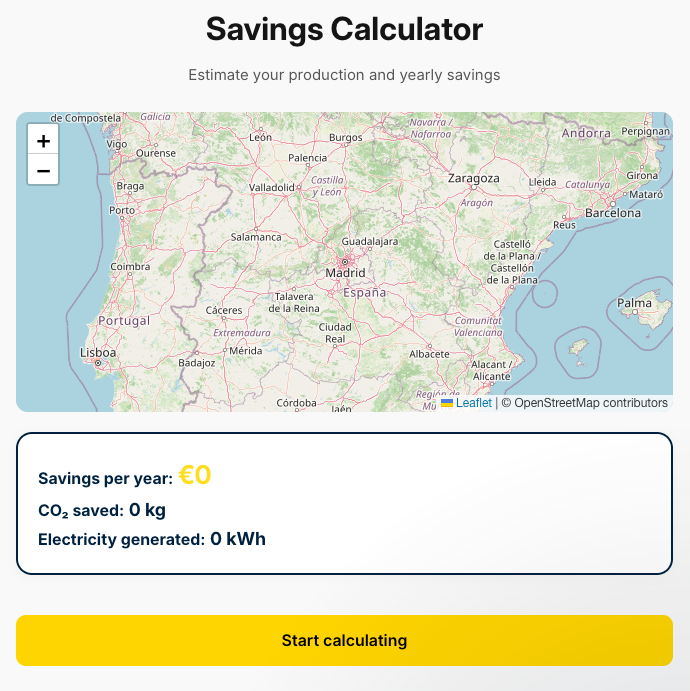
Savings Calculator

Estimate your production and yearly savings

Savings per year: €0

CO₂ saved: 0 kg

Electricity generated: 0 kWh

Find your Robinsun solar kit

Where will you install it?

Choose the mounting location for your kit.

How many panels?

Pick the kit size that fits your needs.

Disclaimer: In Spain, outputs above 800 W require grid certification (CIE) to export surplus. We can handle it for you.